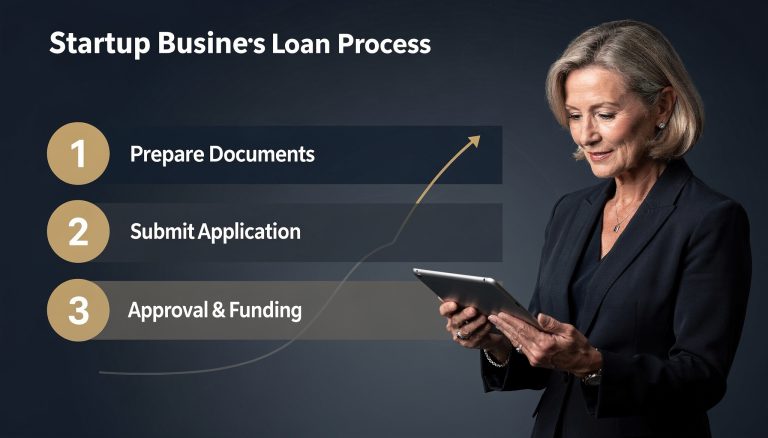

How to Secure a Business Loan for Your Startup
Key Takeaways
Understanding how to secure a business loan for your startup is a pivotal step for entrepreneurs committed to bringing their vision to reality. Below are the key takeaways to help you navigate the loan application process, choose the right options, and strengthen your ability to secure funding successfully.
- Choose a loan tailored to your business needs: Assess options like SBA loans, business lines of credit, microloans, revenue-based financing, or equipment financing. Select the option that aligns with your funding requirements and growth goals.
- Strategic timing increases approval odds: Applying when your startup shows momentum — like achieving an MVP, market traction, or key revenue milestones — boosts your chances of securing favorable terms.
- Understand lender qualification criteria: Be aware of requirements such as credit score thresholds, collateral demands, or revenue expectations. Advanced preparation can streamline your application process.
- Alternative financing can be a lifeline: If traditional loans are not viable, explore options like crowdfunding, grants, or venture debt, which offer flexibility for startups with limited financial history or collateral.
- All credit situations have funding options: Programs and lenders exist specifically for startups at every credit level. Understanding the full landscape of available options gives you a significant advantage.
Get Your Free Funding Proposal →
Introduction
Securing a business loan for your startup marks a crucial milestone in your entrepreneurial journey. For many aspiring business owners, however, navigating the loan process can feel overwhelming. Yet, a clear understanding of the right loan products, qualification systems, and application strategies transforms this challenge into an opportunity. Explore the best business loans for startups to find the right fit for your needs.
Whether you are launching a first-time business or scaling a growing venture, the foundation of financial success lies in preparation. By understanding the landscape of startup business loans with no revenue, creating a compelling case for lenders, and timing your approach effectively, you can unlock valuable capital to propel your business forward.
In this guide, we will break down how to secure the right funding for your startup, offering practical steps and strategies to navigate the loan process with confidence.
💰 Calculate Your Business Funding Payment
Get $100K – $5M in guaranteed funding. See your estimated monthly payment.
$5M
15%
10 years
$85,181
$585,181
See your personalized funding options
Types of Loans for Startups
Funding your startup strategically begins with selecting a loan type that meets your unique needs. Different business models, funding goals, and financial circumstances necessitate different financing solutions. Below, we explore the various types of startup loans, each aligned with distinct objectives.
1. Small Business Administration (SBA) Loans
Backed by the federal government, SBA loans are among the most favorable options for startups. The widely-used SBA 7(a) program offers loans of up to $5 million with flexible repayment schedules and lower-than-usual interest rates. These loans work particularly well for startups needing to cover operational costs, equipment purchases, or market expansion.
- Best Fit: Startups with high-quality business plans, established credit, and a clear vision for growth.
- Potential Drawbacks: Lengthy approval process; requires detailed documentation, including financial projections.
💡 Real-World Example
A manufacturing startup utilized an SBA 7(a) loan to purchase production machinery, secure a competitive interest rate, and extend repayment over seven years, ensuring sustainable cash flow.
2. Microloans
Microloans provide smaller sums of capital — up to $50,000 — via nonprofit organizations or community-based financial institutions. These are ideal for startups with modest capital requirements, especially those serving niche or underrepresented markets.
- Best Fit: New businesses needing funds for inventory, equipment, or minor renovations.
- Potential Drawbacks: Slightly higher interest rates compared to SBA loans; limited funding capacity.
3. Business Lines of Credit
Flexible and revolving in nature, a business line of credit empowers startups to borrow funds up to a set limit, paying interest only on the amount used. This option suits startups with fluctuating costs or short-term financial demands.
- Best Fit: Startups needing working capital for day-to-day expenses like marketing, payroll, or seasonal inventory.
- Potential Drawbacks: Qualification often requires strong personal or business credit; borrowing limits might not support large projects.
4. Revenue-Based Financing
For startups with volatile revenue patterns, revenue-based financing offers repayment that adjusts to earnings. Startups relinquish a percentage of their monthly revenue, making the repayment process proportional to business success.
- Best Fit: Companies in high-growth phases with established monthly revenue streams.
- Potential Drawbacks: Higher costs in the long run due to percentage-based repayment structures.
Choosing the most appropriate loan type positions your startup for financial stability, reducing unnecessary risk. Consider the options available for startup business loans with bad credit to ensure you have the best chance of securing funding.
Qualification Requirements for Startup Business Loans
To establish credibility and reduce perceived risk, lenders evaluate several key factors when assessing startup business loans. Below are the primary elements to prioritize when preparing your application:
1. Credit History and Score
Your personal and business credit (if any) significantly impacts approval odds. Lenders generally prefer credit scores of 650 or higher, though specialized loans such as microloans may accept lower scores. That said, all credit situations have funding options available — the key is matching yourself to the right program.
💡 Pro Tip
Regularly review your credit report for errors, pay down existing debts, and avoid new loans or credit card applications leading up to your loan application.
2. Collateral and Guarantees
Traditional loans may require collateral, such as real estate, equipment, or inventory, to mitigate lender risk. Alternatives like unsecured loans eliminate the need for collateral but usually come with higher interest rates.
⚠️ Key Insight
SBA loans often offer government-backed guarantees, reducing the collateral burden for startups.
3. Business Plan and Financial Projections
A compelling, detail-rich business plan serves as a roadmap for lenders, showcasing your market strategy, financial forecasts, and overall credibility. Include sensible revenue estimates, an expense breakdown, and tangible growth plans.
4. Proof of Financial Viability
Lenders seek evidence of stability, whether through initial pre-sales, savings, or recurring revenue. Providing tax returns, bank account statements, or customer contracts strengthens trust in your financial reliability.
Meeting these qualifications is a critical step in securing financing. In the next section, we will discuss how to strategically time your funding requests for optimal results.
Timing Your Loan Application Strategically
Timing is everything when applying for startup loans. Proactive planning, aligned with your business trajectory, helps secure favorable terms. Consider the following timing strategies:
1. Apply After Key Business Milestones
Showing measurable progress — such as early revenue, customer acquisition, or successfully raising pre-seed funding — builds lender confidence. Metrics like monthly recurring revenue (MRR) can be particularly compelling.
2. Avoid Last-Minute Applications
Applying during a financial crunch can lead to unfavorable terms or outright denial. Instead, anticipate your funding needs well in advance — ideally 6 to 12 months before major expenses arise.
Suitable preparation simplifies loan processing and improves acceptance odds, positioning your startup for long-term success. For entrepreneurs looking to move quickly, explore the fastest ways to get business funding available in 2026.
Frequently Asked Questions
What type of business loan is best for a startup with no revenue?
For pre-revenue startups, microloans, SBA 7(a) loans with strong business plans, and alternative funding programs tend to be the best fit. These options focus less on existing revenue and more on your business plan, market potential, and overall fundability profile.
What credit score do I need to get a startup business loan?
Requirements vary by lender and loan type. Traditional bank loans typically want 650+, while SBA loans may accept scores as low as 620. Alternative funding programs and nonprofit-administered options often consider all credit situations, evaluating your full financial picture rather than a single number.
How long does it take to get approved for a startup loan?
Timelines vary significantly. SBA loans can take 2-3 months due to their documentation requirements. Microloans typically take 2-4 weeks. Alternative and nonprofit-administered funding programs often move faster, with initial reviews happening within 24-48 hours of application submission.
Do I need collateral to get a startup business loan?
Not necessarily. While traditional bank loans often require collateral like real estate or equipment, many alternative funding options do not. SBA loans sometimes offer government-backed guarantees that reduce collateral requirements. The key is matching your situation to the right type of funding.
What documents do I need to apply for a startup loan?
Most lenders will ask for a business plan, personal and business tax returns (if available), bank statements, identification, and any existing financial statements. For brand new startups, a strong business plan with realistic financial projections often carries the most weight in the application.
Can I get a business loan if my startup has bad credit?
Yes. While bad credit limits your traditional bank options, there are funding paths available for all credit situations. Microloans, equipment financing, and alternative funding programs are designed to work with entrepreneurs who are still building their credit profile. Building business credit through tradelines can also help strengthen future applications.
Conclusion
Securing the ideal business loan for your startup is a transformative step, enabling you to lay a sustainable foundation for growth. By identifying the loan type that best aligns with your goals — whether through competitive SBA programs, flexible lines of credit, or alternative lenders — you establish the financial resources needed to scale effectively.
Success is not just about choosing the right loan; it is about positioning your business as a credible and low-risk borrower. Develop a solid business plan, meet lender qualifications, and approach your application with precise timing to maximize success. With preparation, actionable strategies, and intentional timing, entrepreneurs can overcome financial hurdles and bring their boldest visions to life.
Ready to take the next step? A free funding proposal can help you see exactly what options are available for your situation — no upfront cost to apply.
Continue Reading