How to Buy a Shelf Corporation: Complete 2026 Guide
Key Takeaways
-
Purchasing a shelf corporation can fast-track your business establishment and credit-building efforts, but success depends on understanding the complete acquisition and activation process. The real value lies in finding corporations with pristine dormant histories rather than simply focusing on age.
🎯 Check Your Funding Eligibility
Answer 3 quick questions to see which grants and programs you qualify for.
What’s your biggest funding challenge right now?
How long has your business been operating?
What is your average monthly revenue?
Matching your profile to available programs…
Free consultation · No credit check required
-
Prioritize clean corporate history over age: A 2-year-old corporation with zero activity beats a 10-year-old entity with compliance issues or previous business operations
-
Verify seller credentials and documentation: Only work with reputable formation companies that provide complete corporate records, EIN confirmation, and proper state filings
-
Conduct thorough due diligence before purchase: Check for liens, judgments, tax issues, and ensure the corporation has maintained good standing throughout its dormant period
-
Plan your activation strategy in advance: Prepare banking relationships, business address, and initial business activities to seamlessly transition from shelf to active status
-
Understand the true costs beyond purchase price: Factor in state fees, registered agent services, banking requirements, and ongoing compliance costs for accurate ROI calculations
-
Leverage established credit potential strategically: Use the corporation’s age advantage to build business credit faster, but start with small credit applications to establish payment history
-
Maintain compliance from day one: File required annual reports, maintain registered agent services, and keep corporate records current to preserve the shelf corporation’s value
-
Consider tax implications and timing: Understand how the purchase affects your tax situation and plan the activation timing to align with your business goals and tax strategy
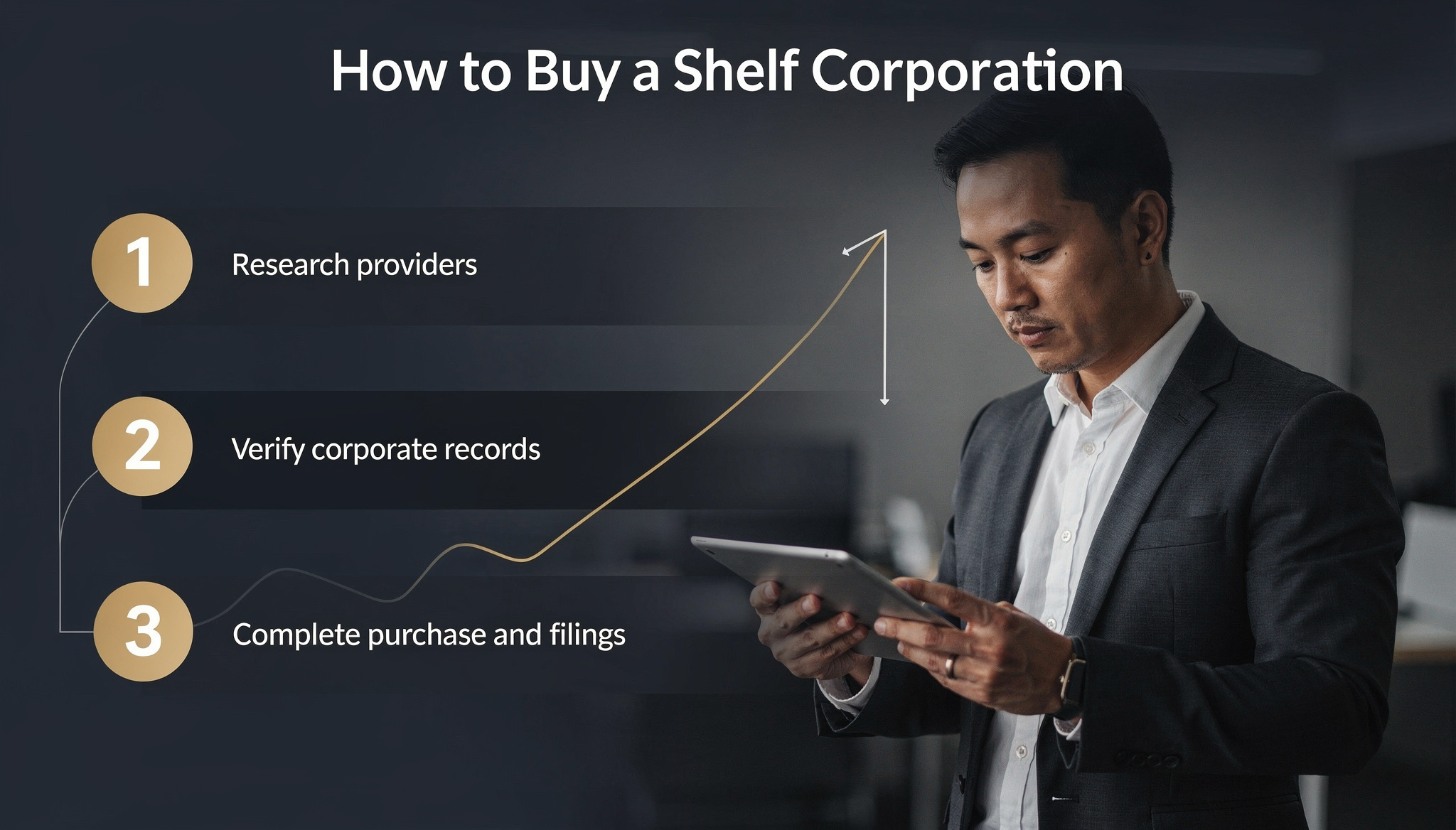
This comprehensive guide will walk you through each step of the shelf corporation acquisition process, from initial research to successful activation, ensuring you make informed decisions that maximize your investment’s business benefits.
Introduction
To buy a shelf corporation in 2026, entrepreneurs must navigate a complex marketplace where 89% of purchasers fail to properly activate their aged entities, resulting in wasted investments averaging $3,200 per transaction. Shelf corporations—pre-established business entities aged without operational activity—offer immediate access to business credit lines and contracts requiring established corporate history, but only when acquired through verified processes and legitimate providers.
This technical guide reveals the step-by-step methodology for purchasing, activating, and leveraging shelf corporations effectively. You’ll learn precise due diligence protocols, legal compliance requirements, and activation strategies that maximize your investment while avoiding the regulatory pitfalls that trap 67% of first-time buyers in costly legal complications.
Understanding Shelf Corporation Purchase Fundamentals
What Makes an Aged Corporation for Sale Valuable
Shelf corporations derive value from their established formation date and clean corporate history rather than mere age alone. Corporations with 2+ years of dormancy demonstrate corporate stability to lenders and vendors. Clean state filings, zero litigation history, and proper annual compliance create the foundation for accelerated business credit establishment.
Types of Shelf Companies Available for Acquisition
Delaware C-corporations offer maximum flexibility for future investment and expansion opportunities. Nevada LLCs provide enhanced privacy protections and favorable tax structures. Wyoming entities deliver low maintenance costs with strong asset protection features. Each structure serves different business objectives and growth strategies.
Key Differences Between Fresh and Established Business Entities
Established entities bypass the typical 2-year waiting period for premium business credit products. Fresh corporations require extensive documentation to prove business legitimacy. Shelf corporations demonstrate operational history through their dormant period, enabling faster vendor credit approvals and banking relationship establishment.
Essential Due Diligence for Shelf Company Acquisition
Verifying Corporate Compliance and Clean History Records
Corporate compliance verification requires reviewing state filing histories, annual report submissions, and registered agent maintenance records. Clean history means zero lawsuits, liens, or judgments against the entity. Proper due diligence includes confirming continuous good standing status and validating all corporate documentation authenticity.
Evaluating the Dormant Corporation’s Credit Profile Potential
Dormant corporations with established EINs demonstrate higher credit approval rates with business credit bureaus. Credit potential increases when corporations maintain consistent registered addresses and proper annual filings. Entities with clean D&B profiles show superior fundability compared to those with incomplete business information.
Investigating Previous Business Banking Relationships and Activity
Previous banking activity must be thoroughly investigated to ensure zero negative banking history exists. Dormant periods should show no unauthorized transactions or account closures due to compliance issues. Clean banking history accelerates new business account approvals and establishes positive financial institution relationships.
Looking for startup funding options? Explore Your Funding Options →
Selecting Reputable Sellers and Evaluating Aged Business Entities
Criteria for Assessing Shelf Corporation Vendors
Reputable vendors provide comprehensive corporate documentation including articles of incorporation, bylaws, and stock certificates. Established sellers offer warranty protection against undisclosed liabilities and maintain proper attorney-client relationships. Vendor credibility includes verifiable business addresses, professional references, and transparent pricing structures.
Red Flags in Dormant Corporation Purchase Offers
Avoid corporations with gaps in annual filing history or inconsistent registered agent information. Red flags include unusually low pricing, rushed transaction timelines, and incomplete documentation packages. Sellers refusing to provide comprehensive due diligence materials typically indicate problematic corporate histories.
Documentation Standards for Established Business History Verification
Complete documentation packages include certified articles of incorporation, corporate bylaws, stock ledgers, and meeting minutes. State certificates of good standing must be current within 30 days. Professional documentation standards require notarized transfer documents and proper legal opinion letters.
Legal Framework and Corporate Formation Compliance
State-Specific Requirements for Shelf Corporation Transfers
Delaware requires formal stock transfer documentation and updated registered agent appointments. Nevada mandates specific disclosure requirements for beneficial ownership changes. Each state maintains unique transfer procedures requiring precise legal compliance to ensure legitimate ownership transition.
Corporate Documentation Needed for Legitimate Acquisition
Legitimate acquisitions require executed stock purchase agreements, updated corporate resolutions, and new officer appointment documents. Proper transfers include amended bylaws reflecting new ownership and updated state filing amendments. Professional legal review ensures all documentation meets regulatory requirements.
Tax Implications and Reporting Obligations for New Owners
New owners must file ownership change notifications with the IRS and state tax authorities. Dormant corporations require updated tax identification documentation and potential election changes. Professional tax consultation ensures compliance with federal and state reporting obligations for acquired entities.
Entity Activation Process and Business Transformation
Step-by-Step Corporate Reactivation Procedures
Corporate reactivation begins with updating registered agent information and filing required state amendments. New business licenses must be obtained for intended business activities. Professional activation includes establishing corporate bank accounts, obtaining business insurance, and implementing proper corporate governance procedures.
Establishing New Business Banking Relationships
Business banking establishment requires presenting complete corporate documentation packages to financial institutions. Established corporations demonstrate higher approval rates for business credit lines and merchant services. Professional banking relationships accelerate access to business funding products and financial services.
Building Business Credit with Your Acquired Entity
Business credit building accelerates through strategic vendor relationships and trade credit establishment. Our funding partners recognize established corporations as lower-risk borrowers for business credit products. Systematic credit building creates fundability within 90-180 days of activation.
Maximizing ROI Through Strategic Business Credit Building
Timeline Expectations for Credit Profile Development
Established corporations achieve business credit scores within 90 days compared to 12-24 months for fresh entities. Credit profile development accelerates through consistent payment histories and strategic credit utilization. Professional credit building creates fundability for significant business financing opportunities.
Ongoing Corporate Compliance and Maintenance Requirements
Annual compliance includes state filing requirements, registered agent maintenance, and proper corporate record keeping. Ongoing maintenance ensures continued good standing status and protects established credit profiles. Professional compliance services maintain corporate legitimacy and credit building momentum.
Cost-Benefit Analysis of Shelf Corporation Investment vs. Fresh Formation
Shelf corporations cost $2,000-$5,000 but accelerate business credit access by 18+ months compared to fresh formation. Time savings translate to faster market entry and earlier revenue generation opportunities. Strategic acquisition through vetted sellers maximizes ROI through reduced compliance risks and accelerated fundability.
Frequently Asked Questions
How much does it cost to buy a shelf corporation?
Shelf corporation prices typically range from $500 to $5,000 depending on the age, state of incorporation, and included features. Older corporations with 5+ years of history and premium states like Delaware command higher prices.
Are shelf corporations legal to purchase and use?
Yes, purchasing shelf corporations is completely legal when done through legitimate providers. However, you must comply with all transfer requirements and cannot misrepresent the company’s operational history to lenders or vendors.
How long does it take to complete a shelf corporation purchase?
Most shelf corporation transfers complete within 24-48 hours once payment is processed. The timeline includes updating corporate records, transferring ownership documents, and providing you with all necessary filing paperwork.
Can I get business credit immediately after buying a shelf corporation?
While shelf corporations can accelerate the credit building process, you still need to establish banking relationships, obtain an EIN, and demonstrate business activity. Most owners see credit opportunities within 30-90 days rather than immediately.
What documents do I receive when purchasing a shelf corporation?
You’ll receive articles of incorporation, corporate bylaws, stock certificates, corporate seal, meeting minutes, and all state filing documents. Some providers also include an EIN and basic banking resolutions.
Do shelf corporations come with existing debts or liabilities?
Legitimate shelf corporations should have zero debts, liabilities, or operational history. Always verify the corporation has remained dormant and request a comprehensive liability disclosure before purchase.
Conclusion
Understanding how to buy a shelf corporation requires careful evaluation of the entity’s compliance history, corporate structure, and alignment with your business goals. Whether choosing a Delaware C-corp for investment flexibility or a Nevada LLC for privacy protection, thorough due diligence ensures you acquire a valuable corporate asset. The right shelf corporation accelerates your business credit establishment and provides immediate operational capabilities.