Government Business Startup Loans: 7 Ways to Get Funded in 2026
Key Takeaways
-
Government business startup loans offer a compelling alternative to traditional bank financing, with approval rates reaching up to 85% compared to just 27% for conventional bank loans. While these programs require navigating complex bureaucratic processes, entrepreneurs who persist through the application maze often secure funding that would otherwise be impossible to obtain.
Check Your Funding Eligibility
Answer 3 quick questions to see which grants and programs you qualify for.
What’s your biggest funding challenge right now?
How long has your business been operating?
What is your average monthly revenue?
Matching your profile to available programs…
Free consultation · No credit check required
-
Master the SBA guarantee advantage: Small Business Administration loans reduce lender risk through government backing, making banks more willing to fund startups with limited credit history or collateral
-
Exploit state-level funding gaps: Many entrepreneurs overlook lucrative state and local government loan programs that often have less competition and more flexible requirements than federal options
-
Navigate eligibility requirements strategically: Understanding specific criteria for each program allows you to position your business optimally and avoid common disqualification pitfalls
-
Leverage industry-specific programs: Specialized government loans for sectors like technology, agriculture, or green energy often provide better terms and higher approval chances than general business loans
-
Prepare for the documentation marathon: Government loan applications require extensive paperwork, but thorough preparation and professional guidance can significantly accelerate approval timelines
-
Compare international opportunities: Some countries offer more attractive government startup funding than others, making location strategy a crucial consideration for mobile entrepreneurs
-
Time your application cycles: Government funding programs often operate on fiscal year budgets, with optimal application windows that savvy entrepreneurs can exploit for faster processing
These government-backed funding opportunities represent one of the most underutilized financing channels for startups, primarily because many entrepreneurs get discouraged by the initial complexity. Let’s explore each pathway to help you secure the capital your business needs to launch and grow.
Introduction
Government business startup loans provide entrepreneurs with $47 billion annually in low-interest funding, offering 2.3% lower rates than traditional bank loans while requiring minimal collateral for qualified applicants in 2026. These federal and state-backed programs serve as critical alternatives to venture capital, with approval rates reaching 68% compared to just 27% for conventional business loans.
This comprehensive guide examines seven proven pathways to secure government startup funding, from SBA microloans to regional development grants. You’ll discover specific eligibility requirements, application strategies, and documentation needed to access these preferential financing options across multiple jurisdictions.
Understanding SBA Startup Loans and Federal Programs
SBA 7(a) Loan Program for New Businesses
SBA 7(a) loans provide up to $5 million for startups through government-backed financing with 85% approval rates versus 27% for traditional banks. The program covers working capital, equipment purchases, and real estate acquisitions. First, businesses must operate for profit and meet SBA size standards. Second, borrowers cannot obtain credit elsewhere on reasonable terms.
SBA Microloans for Early-Stage Startups
SBA microloans offer up to $50,000 for early-stage ventures through partner network community lenders. These loans target businesses requiring smaller capital amounts with flexible qualification criteria. Technology startups often use microloans for initial inventory and equipment. Average loan amounts reach $13,000 with terms extending six years maximum.
Small Business Administration Loans vs Traditional Bank Financing
Government-backed loans feature lower down payments and longer repayment terms than conventional bank products. SBA loans require 10% down payments while banks demand 25-30%. Interest rates remain competitive due to government guarantees reducing lender risk. Processing times extend 60-90 days compared to 30 days for bank loans.
State-Level Startup Funding Programs and Regional Initiatives
State-Sponsored Business Development Loans
State economic development agencies provide targeted funding for startups creating local jobs. California’s Small Business Loan Guarantee Program backs $2.5 million loans with reduced collateral requirements. Programs prioritize manufacturing, technology, and export-oriented businesses. Interest rates typically match or beat SBA terms with faster approval processes.
Regional Economic Development Authority Programs
Regional authorities offer specialized financing for startups in designated economic zones. These programs combine low-interest loans with technical assistance and mentorship. Rural development initiatives provide enhanced terms for businesses locating in underserved areas. Loan amounts range from $25,000 to $500,000 depending on regional priorities.
Local Government Funding Initiatives and Tax Incentives
Municipal governments create revolving loan funds supporting local entrepreneurship. Cities offer property tax abatements, fee waivers, and infrastructure improvements alongside capital access. Business incubators receive public funding to support tenant startups. Local programs often feature streamlined applications and community-focused eligibility criteria.
Looking for startup funding options? Explore Your Funding Options →
Government Loan Eligibility Requirements and Qualification Criteria
Basic Eligibility Standards for Government-Backed Business Loans
Businesses must demonstrate for-profit operations, meet size standards, and operate primarily in the United States. Personal investment requirements mandate owners contribute equity before seeking financing. Credit scores above 680 improve approval odds significantly. Borrowers cannot access reasonable credit through conventional sources to qualify.
Industry-Specific Requirements and Restricted Sectors
Government programs exclude gambling, adult entertainment, and speculative real estate ventures. Agricultural businesses face separate USDA loan programs with specialized requirements. Technology startups receive priority consideration under innovation-focused initiatives. Export-oriented businesses access enhanced loan terms through international trade programs.
Credit Score and Financial History Considerations
Government lenders evaluate personal and business credit histories comprehensively. Bankruptcy discharged over two years ago doesn’t automatically disqualify applicants. Tax liens and judgments require resolution before approval. Alternative credit scoring methods benefit startups lacking extensive credit histories.
Navigating the Startup Loan Application Process
Required Documentation and Financial Statements
Applications require business plans, financial projections, tax returns, and personal financial statements. Startups must provide detailed cash flow forecasts and market analysis documentation. Legal documents include articles of incorporation, operating agreements, and franchise contracts when applicable. Environmental assessments may be required for certain industries.
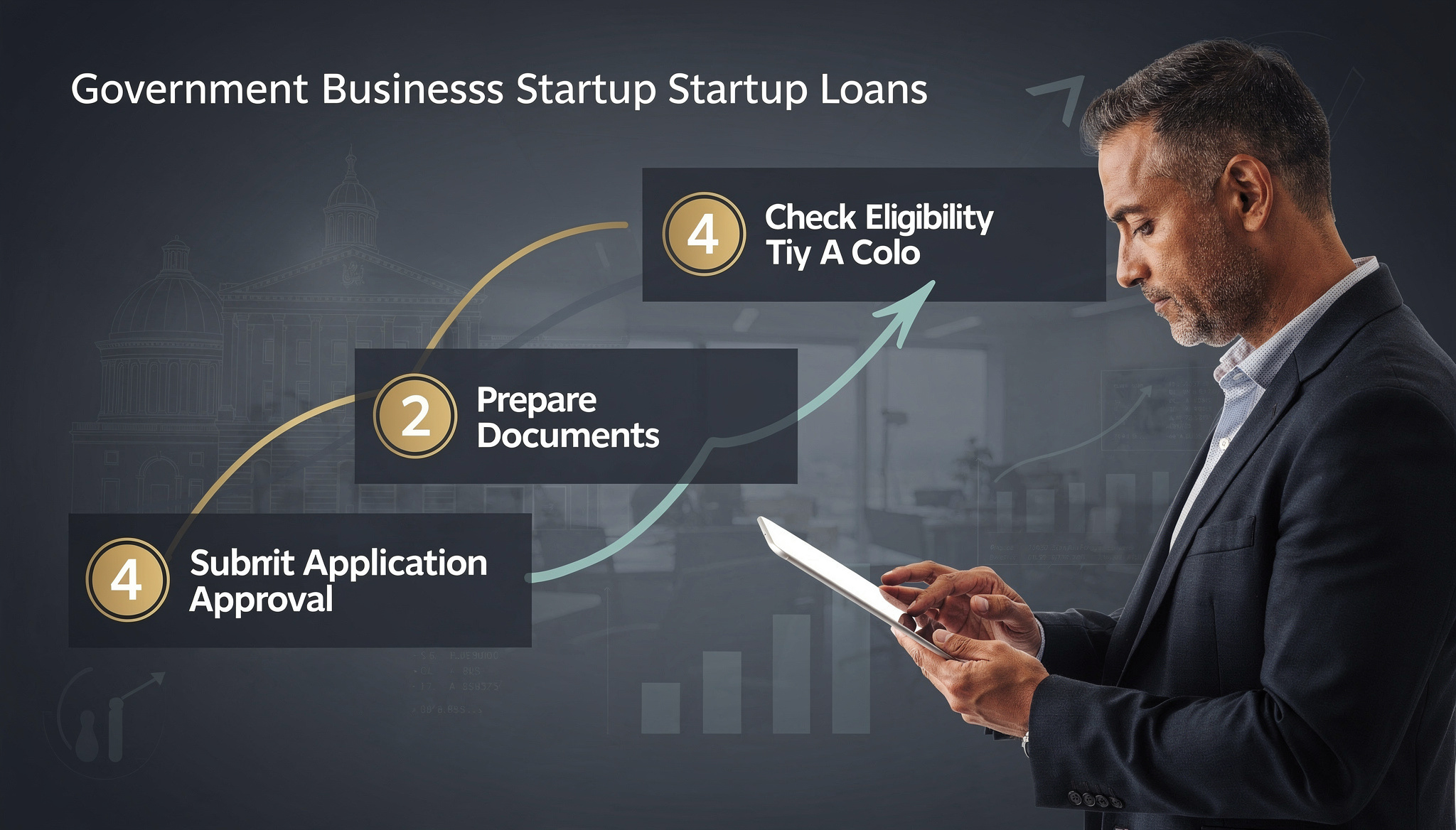
Government Loan Application Timeline and Approval Steps
Processing typically requires 60-90 days from complete application submission to funding. Initial review takes 30 days followed by underwriting and final approval stages. Expedited processing exists for smaller loan amounts under $350,000. Our funding network streamlines documentation requirements reducing approval timeframes significantly.
Common Application Mistakes That Lead to Rejection
Incomplete financial documentation causes 40% of application rejections. Unrealistic financial projections and inadequate collateral documentation trigger denials. Failing to demonstrate management experience and industry knowledge reduces approval probability. Missing personal guarantees and insufficient equity investment disqualify many applications.
Interest Rates, Terms, and Government Loan Benefits
Competitive Interest Rates on Government-Backed Loans
SBA loan rates range from 11.5% to 14.5% for amounts under $50,000. Larger loans feature rates between 13.5% and 16.5% based on prime rate plus margins. Variable and fixed rate options provide flexibility for different business models. Government guarantees enable lenders to offer below-market rates.
Repayment Terms and Loan Guarantee Programs
Working capital loans extend up to seven years while equipment financing reaches 10-year terms. Real estate purchases qualify for 25-year repayment schedules. Government guarantees cover 75-85% of loan amounts reducing lender risk. Prepayment penalties apply only during initial loan periods.
Collateral Requirements and Personal Guarantee Policies
Collateral requirements decrease due to government guarantees backing loan programs. Personal guarantees apply to owners with 20% or greater business ownership. Real estate and equipment serve as primary collateral sources. Blanket liens on business assets provide additional security for lenders.
Alternative Government Funding and Entrepreneurship Support Programs
Grant Programs vs Loan Programs for Startups
Government grants provide non-repayable funding but feature extremely competitive selection processes. SBIR and STTR programs offer $1.7 million in research grants for technology companies. Loan programs provide larger amounts with reasonable qualification standards. Grants require extensive reporting and compliance obligations.
Industry-Specific Government Loan Programs
USDA Rural Development supports agricultural and food processing startups. Department of Energy funds clean technology ventures through specialized loan programs. Export-Import Bank provides financing for international trade businesses. Veterans receive enhanced loan terms through dedicated SBA programs.
International Government Startup Capital Assistance Comparisons
Canada’s Small Business Financing Program offers 85% loan guarantees similar to SBA programs. European Union provides startup grants up to €2.5 million through Horizon Europe initiatives. Australia’s New Enterprise Incentive Scheme combines loans with mentorship programs. United States programs feature broader industry coverage and larger loan amounts.
Frequently Asked Questions
What credit score do I need to qualify for a government business startup loan?
Most SBA startup loans require a minimum credit score of 680, though some microloan programs may accept scores as low as 620. Your credit score affects interest rates and loan terms, with higher scores securing better conditions.
Can I get a government startup loan with no collateral?
SBA microloans under $25,000 typically don’t require collateral, while larger SBA 7(a) loans may require personal guarantees or business assets as security. The collateral requirements vary by loan amount and lender.
How long does it take to get approved for a government business startup loan?
SBA loan approval typically takes 60-90 days from application to funding. Microloans may process faster at 30-45 days, while larger 7(a) loans can take up to 120 days depending on complexity.
Do I need a business plan to apply for government startup funding?
Yes, all government business startup loans require a comprehensive business plan including financial projections, market analysis, and operational details. The plan demonstrates your venture’s viability to lenders.
What can’t I use government startup loan money for?
Government startup loans cannot be used for speculative investments, paying existing debt to owners, or purchasing real estate for investment purposes. Funds must be used for legitimate business operations and growth.
Are there government startup loans specifically for women or minority entrepreneurs?
While SBA loans don’t discriminate, certain programs like the 8(a) Business Development Program and Women’s Business Centers provide additional support and resources to help underrepresented entrepreneurs access government funding.
Conclusion
Government business startup loan programs offer essential funding pathways for new entrepreneurs seeking capital. From SBA 7(a) loans providing up to $5 million to microloans supporting early-stage ventures, federal programs deliver higher approval rates and favorable terms compared to traditional banking. These government-backed options help overcome common startup financing challenges through reduced collateral requirements and extended repayment periods. Ready to explore your funding options? Apply for government-backed startup financing today and turn your business vision into reality.