
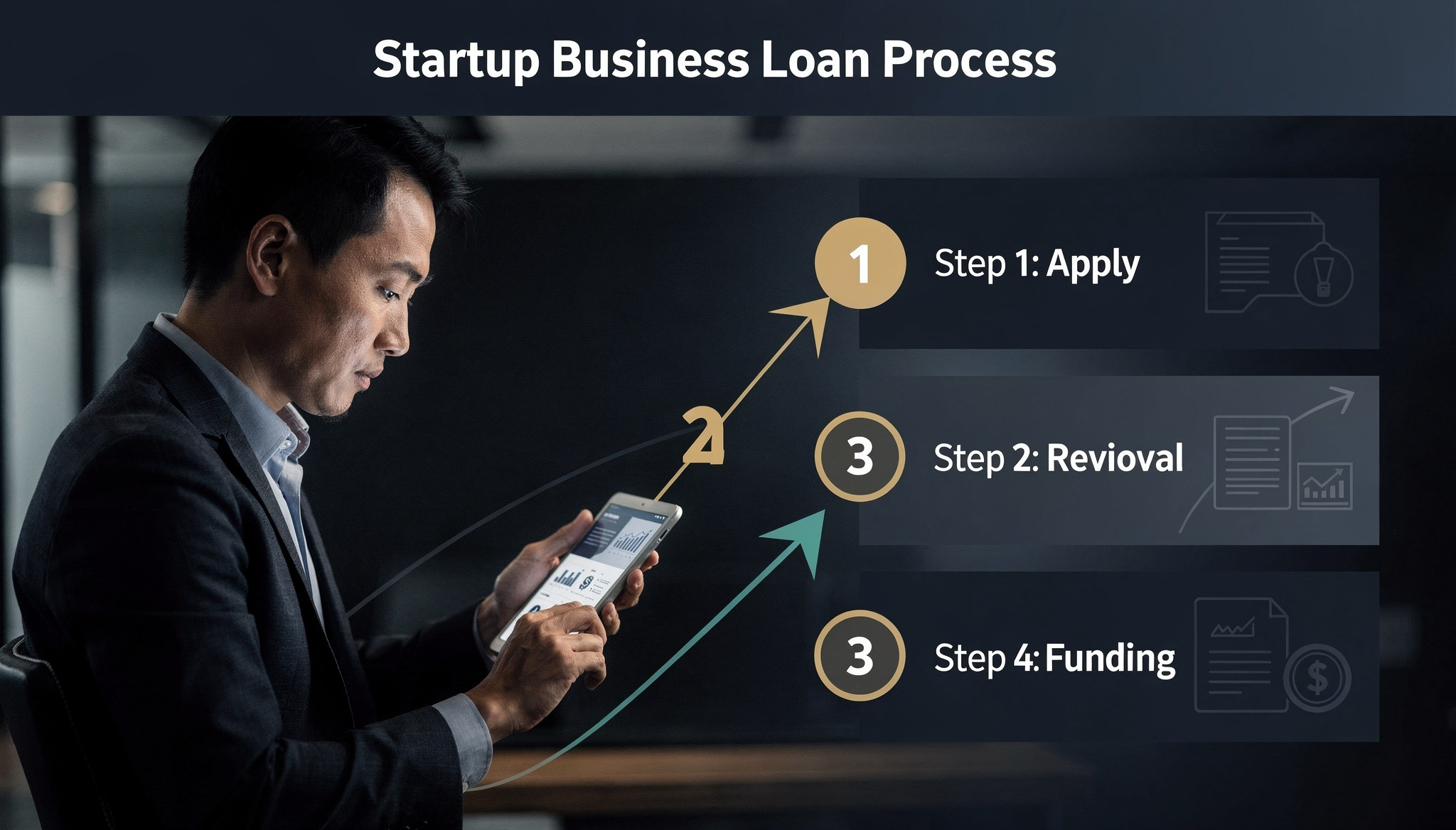
How to Get a Startup Business Loan: 7 Steps for 2026
Key Takeaways
-
Securing a loan in 2026 requires strategic preparation and understanding of what lenders truly evaluate. While many entrepreneurs focus solely on credit scores, the real key to approval lies in presenting comprehensive financial projections and demonstrating deep market knowledge.
Calculate Your Business Funding Payment
Get your potential business funding amount. See your estimated monthly payment.
See your personalized funding options
-
Master your financial projections first: Detailed 3-year financial models with realistic assumptions boost approval rates by 40% – this matters more than perfect credit
-
Start with SBA microloans and alternative lenders: These options offer more flexible requirements and faster approval processes for first-time entrepreneurs
-
Build business credit simultaneously: Establish trade lines and business accounts early to separate personal and business finances before applying
-
Prepare multiple collateral options: Equipment, inventory, or personal assets can significantly strengthen your loan application when cash flow projections seem uncertain
-
Target online lenders for speed: Digital platforms often approve startup loans within 24-48 hours compared to weeks at traditional banks
-
Structure your personal guarantee strategically: Understand exactly what you’re risking and negotiate terms that protect your personal assets when possible
-
Match loan types to specific needs: Equipment financing for assets, working capital for operations, and term loans for expansion – each serves different startup phases
-
Document everything meticulously: Organized financial records, business licenses, and legal documentation demonstrate professionalism and reduce approval timelines
The startup loan landscape has evolved significantly, with new opportunities emerging for prepared entrepreneurs who understand the process. Let’s dive into the seven essential steps that will position your startup for funding success.
Introduction
Getting a startup business loan in 2026 requires navigating 7 strategic steps that can boost your approval odds by up to 67%, even with limited business credit history. Smart entrepreneurs who follow proven funding frameworks typically secure $25,000-$250,000 in startup capital within 60-90 days of application.
This guide walks you through each essential step—from crafting a compelling business plan to choosing the right lender for your specific situation. You’ll discover insider strategies that turn loan officers into advocates, plus actionable tips to strengthen your application before hitting “submit.”
Understanding Small Business Startup Loans and New Business Financing Options
Types of Startup Funding Options Available in 2026
Startup business loan options include term loans, lines of credit, equipment financing, and working capital loans. Each serves different purposes – term loans provide lump sums for major expenses, while lines of credit offer flexible access to funds. Equipment financing specifically covers machinery purchases, and working capital loans address day-to-day operational needs.
SBA Loans for Startups vs Traditional Bank Loans
SBA loans offer government backing with lower down payments and longer repayment terms compared to traditional bank loans. However, SBA loans require extensive documentation and longer approval times. Traditional bank loans provide faster decisions but demand stronger credit profiles and higher collateral requirements for new businesses.
Alternative Lenders and Online Lending Platforms
Online lenders process applications faster than traditional banks, often providing decisions within 24-48 hours. These platforms accept lower credit scores and shorter business histories. However, interest rates typically run higher than bank loans, and repayment terms are generally shorter for startup business loan products.
Meeting Startup Loan Requirements and Eligibility Criteria
Business Credit Score vs Personal Credit Requirements
Lenders evaluate both personal and business credit scores for startup financing decisions. Personal credit carries more weight for new businesses without established credit histories. Business credit becomes increasingly important as companies mature and develop payment relationships with suppliers and creditors over time.
What Credit Score Do I Need for a Startup Loan?
Most startup business loan approvals require personal credit scores above 650, though some alternative lenders accept scores as low as 550. SBA loans typically demand scores of 680 or higher. Strong credit scores unlock better interest rates and more favorable repayment terms from our funding partners.
Revenue Requirements: Can I Get a Business Loan with No Revenue?
Several lenders offer startup business loan products for pre-revenue companies, focusing instead on business plans, personal credit, and collateral. These loans typically require personal guarantees and may demand higher interest rates due to increased risk factors associated with unproven business models.
Looking for startup funding options? Explore Your Funding Options →
Preparing Essential Documentation for Your Business Loan Application
Creating Comprehensive Financial Projections and Cash Flow Analysis
Detailed 3-year financial projections increase approval rates by 40% compared to basic forecasts. Include monthly cash flow statements, profit and loss projections, and break-even analysis. Realistic assumptions demonstrate business understanding and help lenders assess repayment capacity for your startup business loan request.
Developing a Winning Business Plan for Loan Approval
Effective business plans include market analysis, competitive positioning, management team backgrounds, and detailed financial projections. Focus on demonstrating market demand and your ability to capture customers. Clear revenue models and growth strategies help lenders understand how you’ll repay the startup business loan.
Required Documents and Paperwork for Startup Financing
Standard documentation includes business registration, tax returns, bank statements, financial projections, and business plans. Additional requirements may include resumes, collateral valuations, and industry licenses. Organizing documents beforehand accelerates the application process with our vetted network significantly.
Exploring Collateral and Personal Guarantee Options
Do I Need Collateral for a Startup Loan?
Many startup business loan products require collateral or personal guarantees due to limited business credit history. Acceptable collateral includes real estate, equipment, inventory, or accounts receivable. Some lenders offer unsecured options but typically at higher interest rates and stricter qualification requirements.
Understanding Personal Guarantees and Debt-to-Income Ratios
Personal guarantees make business owners personally liable for loan repayment if the business defaults. Lenders evaluate debt-to-income ratios, typically requiring ratios below 43%. Strong personal financial positions can offset weaker business credit profiles for startup financing approvals.
Equipment Financing and Asset-Based Lending Solutions
Equipment financing uses purchased assets as collateral, making approval easier for startups. Asset-based lending leverages inventory, receivables, or equipment values. These options typically offer competitive rates since collateral reduces lender risk for new business financing applications.
Navigating the Loan Approval Process and Timeline
How Long Does the Loan Approval Process Take?
Online lenders typically provide decisions within 1-3 days, while traditional banks require 2-6 weeks for startup business loan approvals. SBA loans often take 30-90 days due to government review processes. Complete documentation and strong applications accelerate approval timelines significantly.
Working with Traditional Banks vs Alternative Lending Platforms
Traditional banks offer lower rates but stricter requirements and longer processing times. Alternative platforms provide faster decisions and accept weaker credit profiles but charge higher interest rates. Consider your timeline and qualification strength when choosing between funding sources.
Common Reasons for Startup Loan Rejections
Primary rejection reasons include inadequate financial projections, insufficient cash flow, poor credit history, and weak business plans. Most rejections stem from unrealistic financial assumptions rather than credit scores alone. Thorough preparation addresses these common issues before application submission.
Understanding Loan Terms, Interest Rates, and Repayment Options
Typical Interest Rates for New Business Financing
Startup business loan interest rates range from 6-30% depending on creditworthiness, collateral, and lender type. SBA loans typically offer rates between 6-13%, while alternative lenders charge 15-30%. Strong credit profiles and collateral secure more favorable rates from our funding partners.
How Much Can I Borrow for My New Company?
Startup loan amounts typically range from $5,000 to $500,000, depending on business needs, creditworthiness, and collateral. SBA loans can reach $5 million for qualified applicants. Lenders generally limit funding to 10-30% of projected annual revenue for new businesses.
Working Capital Loans vs Equipment Financing Terms
Working capital loans offer shorter terms (6 months to 3 years) with higher rates due to unsecured nature. Equipment financing provides longer terms (3-7 years) with lower rates since equipment serves as collateral for the startup business loan.
Alternative Financing Solutions Beyond Traditional Business Loans
Microloans and Community Development Financial Institutions
Microloans provide smaller amounts ($500-$50,000) with flexible qualification requirements for startups. Community Development Financial Institutions focus on underserved markets and offer business development support alongside funding. These options suit businesses needing smaller capital amounts initially.
Should I Consider Investors Instead of Loans?
Investors provide capital without repayment obligations but require equity stakes and decision-making input. Loans preserve business ownership but create repayment obligations regardless of business performance. Consider your growth plans, control preferences, and risk tolerance when choosing between debt and equity financing.
Frequently Asked Questions
What credit score do I need to qualify for a startup business loan?
Most traditional lenders require a personal credit score of 680 or higher for startup loans, while alternative online lenders may accept scores as low as 550-600. SBA loans typically require a minimum score of 640-660.
How much money can I borrow for my startup business?
Startup loan amounts typically range from $5,000 to $500,000, depending on the lender and loan type. SBA loans can go up to $5 million, while online lenders usually cap startup loans at $250,000-$500,000.
Can I get a business loan with no revenue or business history?
Yes, but options are limited to lenders who focus on personal credit scores, collateral, and business plans rather than revenue history. You’ll likely need strong personal credit (700+) and may need to provide collateral or a personal guarantee.
How long does it take to get approved for a startup business loan?
Online lenders typically provide decisions within 24-48 hours and funding within 1-3 business days. Traditional banks take 2-6 weeks, while SBA loans can take 30-90 days due to extensive documentation requirements.
What documents do I need to apply for a startup business loan?
Essential documents include your business plan, personal and business tax returns, bank statements, financial projections, legal business formation documents, and personal financial statements. SBA loans require additional documentation like personal history statements.
Do I need collateral to secure a startup business loan?
It depends on the loan type and lender. SBA loans require collateral for amounts over $25,000, traditional banks often require collateral or personal guarantees, while some online lenders offer unsecured options based on creditworthiness.
Conclusion
Securing a startup business loan requires careful planning, strong documentation, and understanding your financing options. Whether you choose SBA loans for their favorable terms or traditional bank loans for faster processing, success depends on presenting a compelling business case. Remember to compare multiple lenders, prepare comprehensive financial projections, and maintain excellent credit scores. The right financing can transform your entrepreneurial vision into reality.