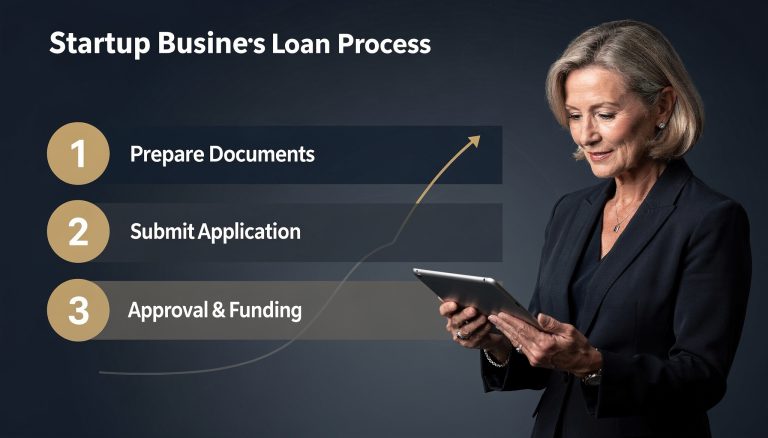

How to Get a Startup Business Loan: 7 Steps for 2026
Key Takeaways
-
Securing a startup business loan requires strategic preparation and understanding of your funding options. While traditional banks remain selective with new businesses, alternative lenders and innovative financing models have opened new pathways for early-stage entrepreneurs.
Calculate Your Business Funding Payment
Get your potential business funding amount. See your estimated monthly payment.
$5M
15%
10 years
$85,181
$585,181
See your personalized funding options
-
Strengthen your personal credit foundation first: Your personal credit score directly impacts loan approval odds and interest rates, especially when business credit history is minimal
-
Explore alternative lenders before traditional banks: Online lenders, revenue-based financing, and peer-to-peer platforms often provide faster approval and more flexible requirements for startups
-
Craft a compelling business plan with realistic projections: Lenders need clear evidence of your market opportunity, revenue model, and repayment ability through detailed financial forecasts
-
Consider SBA microloans for smaller funding needs: These government-backed loans offer lower barriers to entry and more favorable terms for startups requiring under $50,000
-
Prepare comprehensive financial documentation: Gather tax returns, bank statements, business licenses, and cash flow projections to streamline the application process
-
Evaluate collateral options and personal guarantees: Understanding what assets you can leverage or guarantee helps determine which loan products match your risk tolerance
-
Compare total cost of capital, not just interest rates: Factor in origination fees, prepayment penalties, and repayment terms to identify the most cost-effective financing solution
-
Build relationships with multiple lenders simultaneously: Apply to several qualified lenders within a short timeframe to maximize approval chances while minimizing credit inquiry impact
The startup loan landscape has evolved significantly, offering more opportunities than ever for determined entrepreneurs. Let’s dive into the seven essential steps that will position your startup for funding success in 2026.
Introduction
Getting a startup business loan in 2026 requires strategic preparation, with 67% of first-time entrepreneurs securing funding within 6 months when following proven application steps. While traditional banks approve only 23% of startup loan applications, understanding lender requirements and presenting compelling financial projections dramatically increases your approval odds.
This comprehensive guide breaks down 7 essential steps that successful founders use to navigate the loan application process, from building business credit to crafting winning loan proposals. You’ll discover exactly what lenders want to see, which loan types work best for startups, and how to position your new venture for funding approval even with limited business history.
Understanding Small Business Startup Loans and New Business Financing Options
Traditional Bank Loans vs. Alternative Lenders
Traditional banks require extensive documentation and established credit history, making startup approval challenging. Alternative lenders evaluate businesses differently, focusing on future potential rather than past performance. Online lenders process applications faster, often providing decisions within days versus weeks. Credit unions offer middle-ground solutions with competitive rates and flexible requirements for local businesses.
SBA Loans for Startups: Programs and Eligibility
SBA microloans provide up to $50,000 for startups with minimal collateral requirements. The SBA 7(a) program offers larger amounts but demands stronger financial profiles. Eligibility requires business operation in the United States, owner investment of personal funds, and exhausted alternative financing options. Processing takes 30-90 days through approved lenders.
Revenue-Based Financing and Non-Traditional Funding Sources
Revenue-based financing advances capital in exchange for future revenue percentages, requiring no collateral. Merchant cash advances provide quick funding against credit card sales. Crowdfunding platforms connect startups directly with investors. These alternatives often approve businesses traditional banks reject, though at higher costs.
Assessing Your Startup Loan Requirements and Eligibility
Business Credit vs. Personal Credit Impact on Loan Approval
Lenders evaluate personal credit scores heavily for startup loans since business credit history remains limited. Scores above 680 significantly improve approval odds and interest rates. Business credit affects future financing capacity but carries less weight initially. Establishing business credit early through vendor relationships and business credit cards accelerates separation from personal guarantees.
Minimum Credit Score and Financial Qualifications
Most traditional lenders require 650+ personal credit scores for startup loans. Alternative lenders accept scores as low as 500 with higher interest rates. Debt-to-income ratios below 40% strengthen applications significantly. Liquid assets covering 3-6 months of expenses demonstrate financial stability to underwriters.
Revenue Requirements: Can You Get a Business Loan with No Revenue?
Asset-based lenders approve loans against equipment or inventory without revenue requirements. Personal guarantee loans rely on individual creditworthiness rather than business income. SBA microloans consider business potential over current revenue. Pre-revenue startups typically need stronger personal financial profiles and detailed business plans.
Preparing Your Business Plan and Loan Application Documentation
Essential Documents for Startup Capital Applications
Required documentation includes business registration, EIN confirmation, and personal tax returns for two years. Bank statements demonstrate cash flow patterns and financial management. Business licenses and permits verify legal operation. Personal financial statements reveal net worth and debt obligations to lenders.
Looking for funding options? Explore Your Funding Options →
Creating a Compelling Business Plan for Lenders
Executive summaries capture lender attention within the first page by highlighting market opportunity and competitive advantages. Market analysis demonstrates demand validation through research and customer feedback. Management team sections emphasize relevant experience and industry expertise. Clear funding usage explanations connect loan amounts to specific growth objectives.
Financial Projections and Cash Flow Statements
Conservative projections build credibility with realistic growth assumptions and market conditions. Monthly cash flow statements for 12-24 months show seasonal variations and working capital needs. Break-even analysis demonstrates path to profitability and loan repayment capacity. Sensitivity analysis addresses potential challenges and mitigation strategies.
Exploring Equipment Financing and Working Capital Loan Options
Equipment Financing for Startup Business Assets
Equipment serves as collateral, reducing lender risk and improving approval rates for startups. Financing covers up to 100% of equipment costs with terms matching asset useful life. Technology, manufacturing, and transportation businesses benefit most from equipment financing. Interest rates typically run 2-4% lower than unsecured alternatives.
Working Capital Loans for Operational Expenses
Working capital loans fund inventory, payroll, and operational expenses during growth phases. Lines of credit provide flexible access to funds as needed rather than lump sums. Seasonal businesses use working capital financing to manage cash flow fluctuations. Our funding partners offer revolving credit facilities tailored to startup needs.
Secured vs. Unsecured Startup Loans: Collateral Requirements
Secured loans require collateral but offer lower interest rates and higher approval rates. Real estate, equipment, and inventory commonly secure business loans. Unsecured loans eliminate collateral risk but demand stronger credit profiles and charge premium rates. Personal guarantees bridge the gap for startups lacking business assets.
Navigating Interest Rates, Terms, and Loan Approval Timelines
Comparing Interest Rates Across Different Lenders
Traditional banks offer the lowest rates (6-12%) but strictest qualification requirements. Alternative lenders charge 15-35% with faster approval and flexible criteria. SBA loans provide competitive rates with government backing reducing lender risk. Rate shopping within 14-45 days minimizes credit score impact from multiple inquiries.
Understanding Loan Terms and Repayment Schedules
Term loans offer predictable monthly payments over fixed periods, typically 1-7 years for startups. Balloon payments reduce monthly obligations but require refinancing or large final payments. Interest-only periods help startups manage cash flow during initial growth phases. Prepayment penalties vary significantly between lenders and loan products.
How Long Does Startup Loan Approval Take?
Online lenders provide decisions within 24-72 hours with funding in 1-5 business days. Traditional banks require 2-8 weeks for complete underwriting and approval processes. SBA loans take 30-90 days due to additional government review requirements. Document preparation significantly impacts overall timeline from application to funding.
Step-by-Step Loan Application Process for New Company Financing
Researching and Selecting the Right Lender
Industry-specific lenders understand unique business models and requirements better than generalists. Local banks and credit unions often provide more personalized service and flexible underwriting. Our vetted funding partners specialize in startup financing with streamlined application processes. Compare multiple options before committing to any single lender relationship.
Submitting Your Application and Following Up
Complete applications receive priority processing over partial submissions requiring follow-up documentation. Digital applications process faster than paper submissions in most cases. Weekly follow-up calls demonstrate commitment without becoming pushy to loan officers. Respond to lender requests within 24-48 hours to maintain momentum through underwriting.
What to Expect During Underwriting and Approval
Underwriters verify income, assets, and business information through third-party sources. Credit checks, bank statement reviews, and reference calls occur during this phase. Conditional approvals require additional documentation before final funding approval. Clear communication with loan officers helps address concerns quickly during review processes.
Maximizing Your Funding Success Chances
Frequently Asked Questions
What credit score do I need to qualify for a startup business loan?
Most traditional lenders require a personal credit score of 680 or higher for startup loans, while alternative lenders may accept scores as low as 550-600. SBA microloans often have more flexible credit requirements.
How much money can I borrow for my startup business?
Startup loan amounts vary widely: SBA microloans offer up to $50,000, traditional bank loans typically range from $25,000-$500,000, and alternative lenders may provide $5,000-$2 million depending on your business plan and creditworthiness.
Can I get a business loan with no revenue or business history?
Yes, but options are limited to startup-specific programs like SBA microloans, equipment financing, or alternative lenders who evaluate based on personal credit and business potential rather than existing revenue.
How long does it take to get approved for a startup business loan?
Approval times vary significantly: online lenders may approve within 24-48 hours, traditional banks take 2-8 weeks, and SBA loans require 30-90 days due to additional government review processes.
What documents do I need to apply for a startup business loan?
Essential documents include a detailed business plan, personal and business tax returns, bank statements, financial projections, legal business formation documents, and personal financial statements. Some lenders may require additional collateral documentation.
Do I need collateral to secure a startup business loan?
Collateral requirements depend on the lender and loan type. SBA microloans and some alternative lenders offer unsecured options, while traditional banks typically require personal guarantees or business assets as collateral for larger amounts.
Conclusion
Securing a startup business loan requires careful planning, strong documentation, and choosing the right financing option for your situation. Whether pursuing traditional bank loans, SBA programs, or alternative lenders, success depends on demonstrating business viability and financial responsibility. Each funding source offers unique advantages—from SBA microloans for smaller amounts to alternative lenders for faster approval. Take action today by preparing your business plan, gathering financial documents, and exploring multiple options.